Thursday, May 14, 2020

Come And Knock on His Grave

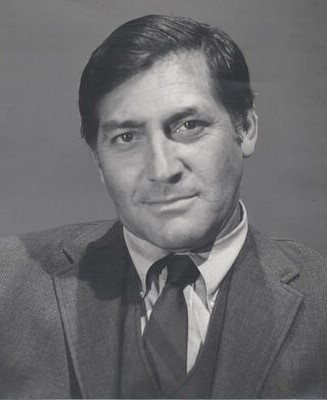
Jesse Donald Knotts was born in Morgantown, West Virginia on July 21, 1924.  Things pretty much went downhill from there.  His father, both a schizophrenic and an alcoholic, suffered a nervous breakdown following Don's birth.  Years later, he would terrorize the boy with a kitchen knife, before ultimately dying of pneumonia when Don was just 13 years old. 

After Don graduated from high school, he enlisted in the Army during World War 2.  He served with Special Services throughout his tour, entertaining troops stationed in the Pacific. Following the war, he returned to West Virginia and earned his bachelor's degree in education.

Don performs as Windy Wales.
Upon graduation, Knotts married and moved to New York City, where he started getting his first jobs in entertainment.  He had a stand-up comedy routine, and he also appeared on a radio western series called "Bobby Benson and the B-Bar-B Riders."  He played a know-it-all braggadocio named Windy Wales.  You can hear an episode in its entirety here.

He didn't land on television until 1953 and when he did it wasn't in comedy.  For two seasons, Knotts appeared as Wilbur Peterson on the daytime soap opera Search for Tomorrow.  Really.

For the next few years, he'd appear on Broadway and occasionally on television, before being cast in the role for which he is most famous, Deputy Barney Fife on The Andy Griffith Show.  His portrayal of the bumbling deputy would earn Knotts five Emmy Awards for Best Supporting Actor.

Knotts left the series in 1965 and appeared in a number of now-classic Hollywood comedies, including It's a Mad, Mad, Mad, Mad World (1965) and The Reluctant Astronaut (1967).  In 1975, he teamed up with fellow comedian Tim Conway for a number of films, including The Apple Dumpling Gang (1975) and The Private Eyes (1981).  Click on any of those titles to view their respective trailers.

The Apple Dumpling Gang (1975).
In 1979, Knotts disproved the rumor that lightning never strikes twice, when he accepted the role of Ralph Furley on the hit ABC sit-com "Three's Company."  For five seasons, he entertained a new generation of fans, while simultaneously intimidating his co-stars, who were in awe to be working with a star of his status.  Knotts joined the series as it suffered a series of dramatic departures, and is often credited with helping to smooth the transition. 

Following the show's conclusion in 1984, Knotts continued to act on television well into the early 2000s, often reuniting with friend and co-star Andy Griffith.  The two reprised their iconic roles in the made-for-TV movie Return to Mayberry (1986) and occasionally appeared together on Griffith's legal drama series, Matlock.

On September 12, 2003, Knotts was appearing in a stage production of On Golden Pond in Kansas City when he received a call from the family of his Three's Company co-star John Ritter, informing him that the actor had died suddenly that morning on the set of his series 8 Simple Rules for Dating for my Teenage Daughter.  Earlier that same year, Knotts had appeared on the series reprising his role of Furley in a Three's Company dream sequence, with Ritter assuming the Norman Fell role of Stanley Roper.  You can watch Knotts's scene here.  Around the same time, Knotts began losing his eyesight, and his television appearances became fewer and fewer.

In February 2006, Knotts checked into Cedars-Sinai Medical Center in Los Angeles suffering from pneumonia.  He'd ultimately pass on February 24th with the official cause of death listed as lung cancer.  He was 81 years old.

Knotts was interred at Pierce Brothers Westwood Village Cemetery in Los Angeles.  His marker depicts a number of his more famous roles, though shockingly, Mr. Furley is not among them.


Rest in peace, RF.

Trivia

  • Unlike his Mayberry counterpart, Knotts was very comfortable around firearms, having earned the Marksman Badge during World War 2.

  • As originally envisioned, The Andy Griffith Show was to feature Knotts as the straight man with Griffith as the more comedic character.  By the second episode however, it was obvious to all concerned that Knotts was the funnier of the two, and the roles were quickly reversed.

  • Singer "Guns N Moses" delivered a Barney Fife tribute song to the tune of Billy Joel's "We Didn't Start the Fire."  You can hear it here.  Worth two minutes of your time.

  • Following Don's death, Andy Griffith appeared on The Today Show to discuss his co-star's life and career with disgraced anchor Matt Lauer.  Watch it here.

  • This blog visited the grave of Don's Mayberry co-star Frances Bavier in 2018.  Read about it here.

  • Don's hometown of Morgantown, West Virginia unveiled a statue to their local legend on July 23, 2016.  You'll find it in front of the Metropolitan Theatre.

Saturday, May 9, 2020

And Away He Go!

John Herbert Gleason was born to Irish immigrants in Brooklyn on February 26, 1916.  To say that he had a rough childhood would be an understatement.  He was only three years old when his older brother died of meningitis.  A few years later, Gleason’s father abandoned the family, and young Jackie turned to pool hustling as a way to support his mother.  She in turn died a few years later of sepsis, and by 19, Gleason was on his own.

During his high school years, Gleason took an interest in acting after appearing in a school play.  He dropped out right before graduation and took a job as master of ceremonies at a local theatre.  At the same time, he formed his first professional act with a close friend, and the two performed regularly at Brooklyn’s Halsey Theatre.  

By his early 20s, Gleason had a stand-up routine and performed regularly at Club 18, a New York comedy cabana where patrons often served as comedic fodder.  During one such appearance, he was noticed by studio head Jack Warner, who later signed Gleason to his first film contract.  

Gleason's first films included Navy Blues with Martha Raye and All Through the Night with Humphrey Bogart.  Click on those titles to see their respective theatrical trailers.  The films didn't advance his career much, and it wasn't until he appeared on Broadway in 1944 that his career really started to take off.  

By 1950, Gleason had appeared on a number of TV series.  That year, he was asked to host the variety series Cavalcade of Stars.  Here's an episode in its entirety, brought to you by the Druggists of America.  If nothing else, at least listen to the jingle.

He proved so popular that the series was later renamed The Jackie Gleason Show.  It was during this run that he developed many of the sketch characters he would use throughout his career, including his most famous, fellow Brooklynite Ralph Kramden.  The Honeymooners first appeared as a sketch on the show, but by 1955, Gleason had enough confidence in it to turn it into a series.  Although it only lasted for one season, those "Classic 39" episodes have been rerun ever since.  

Gleason with future profilee
Audrey Meadows.
Gleason appeared in a number of films in the 1960s, with varying degrees of success.  He was nominated for an Academy Award for Best Supporting Actor in 1961's The Hustler, starring Paul Newman.  Conversely, he wrote, produced and starred in 1962's Gigot, which proved to be a cinematic flop.  Due to its poor reception, Gleason would later be denied the role of Popeye Doyle in The French Connection, a part for which Gene Hackman would win an Academy Award.  Curious?  You can watch Gigot in its entirety here.

Gleason would finally reclaim cinematic success in 1977, when he accepted the role of Sheriff Buford T. Justice in Smokey and the Bandit.  Director Hal Needham gave Gleason free reign to ad lib, which Gleason took full advantage of.  He also improvised a number scenes throughout the film, most notably where his character unknowingly runs into the Bandit at a “choke and puke.”  You can watch that scene here.

Smokey and the Bandit was an unexpected hit at the box office that year, second only to Star Wars.  That pretty much mandated a sequel, which was released in 1980.  The entire cast returned for Smokey and the Bandit Part 2, but it was clear that the series was already running on fumes.

Despite that, 1983 saw the release of Smokey and the Bandit Part 3, a film that is mired in controversy.  Although Gleason agreed to revive his role in the film, series regulars Burt Reynolds, Sally Field and Jerry Reed all refused to appear.  What happened next is the subject of great debate.

As originally shot, Gleason played both title roles, Smokey AND the Bandit.  The film's original trailer even advertised the title as Smokey IS The Bandit Part 3.  You can watch that trailer here, although YouTube has a tendency to remove it.

Gleason as the Bandit?
The story goes, and take this with a grain of salt, that test audiences were utterly confused by Gleason’s dual performance, so at the 11th hour, Jerry Reed was coaxed into re-shooting all of the Bandit’s scenes.  Indeed, that’s how the film was finally released.  Other than the trailer, it’s difficult to find any evidence of the film’s original intent, and no footage of Gleason as the Bandit has ever surfaced, although this photo has.  If it exists, the original footage is probably entombed with Gleason.

A few years later, Gleason appeared in his final film, Nothing in Common, co-starring Tom Hanks.  During production, he was diagnosed with terminal colon cancer, which ultimately took his life on June 24, 1987.  He was 71 years old.

Gleason was laid to rest at Miami’s Our Lady of Mercy Catholic Cemetery.  His final resting place could be mistaken for a Greek temple.  It’s one of the most impressive I’ve ever seen and it’s quite easy to find.  It rests atop a lonely hill overlooking the cemetery.


Rest in peace to the Great One.

Trivia
  • Gleason grew up at 328 Chauncey Street in Brooklyn, the same address he later gave the Kramdens.

  • Gleason was drafted in 1943, but was classified as 4-F upon reporting to induction.  Doctors discovered a plethora of disqualifiers, including an incorrectly healed left arm and a cyst on his coccyx.  He was also more than 100 pounds overweight.

  • Gleason  had a photographic memory, which he often used as a way to get out of rehearsals.

  • Throughout the 1950s and 60s, Gleason had a secondary career as a musician and released several albums.  His first one, entitled "Music for Lovers Only," holds the record for the longest stay on the Billboard Top Ten Chart at 153 weeks.  Seriously.  Not even Elvis or the Beatles beat it.  Pick up a copy here.

  • Gleason was well known for his interest in the paranormal and UFOs.  He even owned a home in upstate New York that was shaped as a flying saucer.  Author Larry Halcombe reports that this interest led President Richard Nixon to publicly disclose some government information on UFOs.
      

Saturday, May 2, 2020

Fred "Rerun" Berry

Fred Allen Berry, aka Rerun, was born in St. Louis on March 19, 1951.  Although he grew up in a housing project, fame and success came at a relatively young age.  Berry was a born entertainer known for his humor and for his dancing, which were not always mutually exclusive.

In 1971, he joined the Los Angeles-based dance troup The Lockers, one of the early pioneers of breakdancing.  The group made several appearances on television, including the third episode of Saturday Night Live.  Berry was also a guest on the dance variety series Soul Train, where he performed the 70's dance step "the slow-mo."  Here he is in 1973 and again in 1984.

His dancing caught the attention of television executives who were planning a new series featuring an African-American family.  In 1976, with no professional acting experience whatsoever, Berry was cast in the role of Rerun on the ABC sit-com What's Happening!!.  It would define his life.  Watch the iconic intro here.

The cast of "What's Happening!!"
The series was an overnight success and made stars of its young cast.  It ran successfully for three seasons before running out of gas in 1979.  But this would not be the end of the series.

In 1985, after five years of successful syndication (notice how I didn't say reruns), the series returned as What's Happening Now!!.  Nearly all of the cast reunited for the new series, which like the original, ran for three seasons, this time in first-run syndication.  Berry would only appear in the first season however, when contract negotiations could not be settled.  Watch the series intro here.

Following his departure from the series, Berry returned to the world of dance and began a musical career as well. In 1991, he released a gospel album entitled "Always on Time."

Berry relocated to the east coast in the late 90s and was a resident of Prince George's County, Maryland.  He turned to other avenues of employment, including real estate.  He was a pitchman for Hollywood Comes to Hampton Road, a housing community in Virginia Beach.  He was also a Baptist minister.

Berry also joined the circus.  The Univer-Soul Circus to be exact, an African-American owned and operated traveling show.  In 2001, he signed a one-year contract to appear as a performer in the show.  Things went south rather quickly however, after Berry became upset that he was being asked to perform as his character Rerun.  He brought a lawsuit against the company, Berry v. Soul Circus, Inc., which you can read in its entirety here.

By 2003, Berry had returned to Los Angeles, where he suffered a stroke. On October 21st, he died in his home.

He was interred at Forest Lawn Hollywood Hills.  For years, the grave remained unmarked, and it was quite a challenge to actually locate it.  But now a marker reveals the location.


Inscription: Beloved Husband, Father, Grandfather, Friend, Dancer, Actor, Singer & Comedian.
Hey Hey Hey!
Location: Tribute Section, Lot 1015, Grave 4
Rest in peace, Rerun.

Trivia
  • Rerun and the rest of the cast appeared together on another ABC series, The Brady Bunch Hour.  Watch the episode in its entirety here.

  • Rerun was very fond of weddings, having walked down the aisle himself no less than six times.

  • Rerun showed off his dance moves in Snoop Doggy Dogg's music video "Doggy Dogg World."  Watch it here.

  • VH1 did a "Where Are They Now Segment" on Rerun in 2002.  Watch it here.

  • Five years after Rerun passed, his final film, Rerun's in the Hood Comedy Jam, was released on DVD.  Rerun plays Uncle Paul, an arms dealer and drug kingpin who also owns "Hooterville," the hottest strip club in town.  Pick up a copy here.

Saturday, April 25, 2020

Superfriend to the End

Norman Alden wasn't a household name.  But character actors die too, and sooner or later they end up on this blog.  While his name may not ring a bell, you've surely seen him in films and on TV, or heard his voice in Saturday morning cartoons, most famously as Aquaman on the original Superfriends.  Here's a sample of him in that role.

He was born Norman Adelberg in Fort Worth, Texas on September 13, 1924.  Like many in his generation, he joined the Army after high school and served his country during World War 2.  After the war, he returned to Fort Worth and attended Texas Christian University under the GI Bill of Rights.

Norman's alter ego.
After earning his degree, Alden started receiving bit parts and guest roles on television, on such series as The Adventures of Rin Tin Tin, Adam-12 and The Andy Griffith Show.  Then in 1973, he was cast as Aquaman during the freshman season of The Superfriends.  Alden would later be replaced in the role by William Callaway.

This wasn't his only venture into Saturday morning television however.  In 1976, he was cast in the live-action Sid and Marty Krofft production Electra Woman and Dyna Girl.  It was a featured series of the hour-long Krofft Super Show, which included other productions, including Wonderbug, Dr. Shrinker and Magic Mongo.  Alden played Frank Heflin, a computer genius and the brains of the outfit, alongside an unknown Deidre Hall in the title role, and a still-unknown Judy Strangis as her female Boy Wonder.

Electra groovy!
Throughout the 70s and into the 80s, Alden continued to make guest appearances on television, on series such as Dallas, Welcome Back, Kotter, and Night Court.  In 1985, he returned to the big screen, in what many consider to be his most famous role, that of Lou in Back to the Future, a 1955 diner owner who has a hard time understanding 1985's Michael J. Fox.  Watch the scene in its entirety here.

Alden's last role of note was in the 1994 film Ed Wood, as Cameraman Bill.

"Tab? I can't give you a Tab unless you order something!"
Norman Alden died of natural causes on July 27, 2012.  He was interred at Hollywood Forever Cemetery.

Beth Olam Mausoleum (outside wall)
South Wall
Elevation 3
Crypt G-130
Rest with the fishes, Aquaman.

Trivia
  • Throughout the 1970s, Alden appeared in a series of commercials for AC Delco as Lou the Mechanic.  Watch one such commercial here.

  • While most famous for voicing Aquaman, Alden had previously appeared on the live-action Adam West Batman series as "Henchman #1," in the dual episode "The Joker Trumps an Ace/Batman Sets the Pace."

  • Alden played the title character in the 1965 film Andy, the story of a mentally handicapped man in his middle ages and the elderly parents who still care for him.   You can watch the film in its entirety here.

  • Alden appeared in two episodes of The Dukes of Hazzard playing Sheriff Lacey of neighboring Springville County.

  • In 1986, Alden appeared in an episode of the sit-com Small Wonder, unaware that it had been written by his cousin, Jack Gross.

  • Aquaman wasn't the only cartoon character voiced by Alden.  He was also in the original Transformers series as a robot named Kranix.  Watch him meet his doom in this clip.  Ironically, his character can't swim.

Saturday, April 18, 2020

A Rascal to the End

Carl Dean Switzer, aka Alfalfa, was born in Paris, Illinois, on August 7, 1927.  He was the third of four children to Scottish and German immigrants.  Like his older brother Harold, Carl loved to perform and was adept at several musical instruments.  The two often performed together in their local community.

In 1934, the family came to Hollywood on vacation.  While there, they toured Hal Roach Studios, which had been producing the Our Gang series of shorts for nearly a decade.  The series featured "real kids" as Roach described them, and included several who would go on to enjoy lucrative careers in Hollywood, including Jackie Cooper and Robert Blake (the less said about the latter the better).

While dining at the studio cafeteria, the Switzer brothers began an impromptu performance, which immediately caught Roach's eye.  He signed both brothers on the spot.

Carl and Harold Switzer.
Carl of course, was cast as "Alfalfa," and would enjoy great success in the role, eventually surpassing series lead George "Spanky" McFarland in popularity.  Harold wasn't as successful however, being cast first as "Slim" then "Deadpan," before finally being relegated to the background.

Carl played Alfalfa for six years, finally retiring from the role in 1940.  At age 12.  He continued acting in Hollywood, but like many in his profession, he found himself typecast, and good roles were hard to come by.  For the next decade, he took uncredited bit parts.  He looked for other moneymaking ventures, and turned his love of dogs into a profession.  He bred and trained hunting and guide dogs and often led guided hunting expeditions.  His clients were nothing short of Hollywood royalty, and included Roy Rogers, Jimmy Stewart and Henry Fonda.

One of his other clients was Moses Samuel Stiltz.  Switzer agreed to train a hunting dog for Stiltz, but he lost the dog when it took off after a bear.  Switzer offered $35 of his own money as reward for the dog's return.  A few days later, a man claimed the reward, when he brought the dog to a lounge where Switzer tended bar.  Switzer also thanked him by buying $15 worth of drinks for the good Samaritan.

Moses Samuel "Bud" Stiltz.
After thinking and drinking about it for a few days, Switzer decided that Stiltz owed him the $50.  Accompanied by his friend Jack Piott, Switzer went to the home where Stiltz was staying and skipped past all the pleasantries.

"Let me in, or I'll kick in the door," Switzer declared, without even so much as a hello.  "I want that $50 you owe me and I mean now!"

Once inside the house, Switzer attached Stiltz with a glass-domed clock, causing him to bleed from his eye.  Stiltz retreated to his bedroom and retrieved a .38-caliber revolver.  After a brief struggle for the gun, Switzer pulled a knife and screamed "I'm going to kill you" at Stiltz.  Fearing for his life, Stiltz shot him in the groin, causing massive internal bleeding.  Switzer was pronounced dead at the hospital.

The shooting was ruled self-defense, and Stiltz was never charged.  However, 42 years later, on January 25, 2001, a new version of events was presented by Stiltz's stepson, Tom Corrigan, who as a child had been present on the night of the incident.

According to Corrigan, Stiltz's wife opened the front door for Switzer, after he jokingly said "Western Union for Bud Stiltz."  Corrigan stated that although Switzer was drunk and demanded the $50, it was Stiltz who had been the aggressor, grabbing his gun when there was no immediate threat from either Switzer or Piott.  Corrigan also claimed that it had been Piott who had smashed the clock over Stiltz's head, which in this version, was done only after Stiltz had brandished his weapon.  Finally, Corrigan stated that as he left the house, he heard Stiltz fire the gun and turned to see a stunned Switzer slide to the floor.  Stiltz then allegedly grabbed Piott and shoved him against a kitchen counter, but stopped short of shooting him as police sirens were heard outside.  Although fascinating, Corrigan's claims have never been validated and the case remains closed.

Switzer was interred at Hollywood Forever Cemetery.

Garden of Memory
Grave 6
Lot 26

Trivia
  • Switzer was not well liked by his co-stars, as he often played practical jokes on them, which held up production.  Ironically, his best friend from the series was actor Tommy Bond, who played Alfalfa's antagonist "Butch."

  • Switzer's final acting role of note was in the holiday classic It's a Wonderful Life.  Watch him annoy Jimmy Stewart in this clip.  He comes in at the 40 second mark.

  • The house where Switzer died is located at 10400 Columbus Street in Hollywood.  Join Big Bill Anderson's tour of the house in this video.

  • In a final indignity, Switzer died on the same day as celebrated Hollywood director Cecil B. DeMille, who's death stole all the headlines.  Ironically, the two are buried in the same cemetery.

  • Author Olivia Watson investigated the case for her book The Murder of Alfalfa.  Pick up a copy here.

  • Switzer's co-star Darla Hood, who died in 1979, is also interred at Hollywood Forever, just a short distance from him.

  • While its natural to assume that the dog on Switzer's marker is a reference to Our Gang's Petey, it isn't.  It's a nod to his later profession.

Saturday, April 11, 2020

Top Stooge

I gotta admit. This one surprised me.  Every week I conduct a poll on Facebook to determine who gets profiled here next.  This time it was a Three Stooges poll.  To my shock, Moe was the clear winner.  I never would have guessed that.

Moses Harry Horwitz (Moe Howard) was born in Brooklyn on June 19, 1897.  He was the fourth born of five sons to Lithuanian immigrants.  Two of his older brothers, Benjamin and Irving, were not involved in show business.  But Moe, older brother Shemp and younger brother Curley would all become household names as The Three Stooges.

Moe never had much interest in education, often playing hookey from school.  The truant officer usually found him in the same place - standing outside a local playhouse.  Moe would often ask passersby to give him the ten-cent admission price, so he could spend the day watching live performances.  He formally ended his education by dropping out of high school to pursue acting full time.

Ted Healy and His Three Stooges.
By age 16, Moe was already performing in nightclubs, along with Shemp, until their father put an end to it.  He then joined a traveling minstrel show on a Mississippi riverboat for two seasons.

His big break didn't come until 1921, when he joined his childhood friend Ted Healy in a vaudeville routine.  During one stage performance, Shemp heckled the duo from the audience, and the repartee between the three was so entertaining that Shemp was made a permanent  member of the act.  Violinist Larry Fine would join the act in 1928.  Just one year later, the three would strike out on their own following a disagreement with Healy.

The three traveled the country together over the next four years, until Shemp left the group in 1933.  Moe suggested that they recruit younger brother Curley as the new stooge, and in that moment, history was made.

In 1934, the stooges signed with Columbia Pictures.  There they stayed until 1957, producing a total of 190 short films.  Watch the iconic intros here.  While Moe and Larry would remain constants throughout, Curley left the group midway following a stroke.  They'd see a score of replacement stooges, including former act member Shemp, and comedians Joe Besser and Joe DeRita, none of whom would ever replicate Curley's charm.

The Stooges received no residuals for their work, and sought other avenues of employment when their contracts finally expired.  Moe had some minor, walk-on roles in films and television, but he also sold real estate, a profession he had pursued earlier in his life.  He often appeared as a guest on the talk show The Mike Douglas Show, including this episode from 1973.

By 1975, Moe's lifelong nicotine habit had finally caught up with him.  In April that year, he was admitted to Cedars-Sinai Medical Center in Los Angeles, where he died of lung cancer on May 4th, just three months after fellow Stooge Larry Fine.  He was 78.

Moe was interred at Hillside Memorial Cemetery in Culver City, California.

Garden of Memories
Alcove of Love
Wall C
Crypt #233

Rest in peace, knucklehead.

Trivia
  • Moe created his distinctive hairstyle when still just a boy, as his mother refused to cut his hair, allowing it to grow down to his shoulders.  He would often retreat to the family woodshed to do the job himself, thus explaining the odd-looking bowl cut that he is always associated with.

  • Moe's wife Helen Schonberger, with whom he had two children, was a cousin of Harry Houdini.

  • Moe was working on his autobiography at the time of his death.  It was posthumously released as Moe Howard and The Three Stooges.  Pick up a copy from Amazon.

  • On August 30, 1983, The Three Stooges were posthumously given a star on the Hollywood Walk of Fame, located at 1560 Vine Street.  Look for it in front of the Camden Apartment Building.

  • Philadelphia is home to the world's only museum devoted to The Three Stooges, the aptly named "Stoogeum."  It's well worth a detour on your next trip, but call ahead, as tours are by appointment only.  You can visit their web site here.


Saturday, April 4, 2020

Surely You Can't Be Serious!

Leslie William Nielsen was born in Regina, Saskatchewan on February 11, 1926.  Dude was Canadian.  I had no idea.  He was the second of three boys to his mother, an immigrant from Wales and his father, who was a member of the Royal Canadian Mounted Police.

Nielsen's uncle was Jean Hersholt, a Danish actor who immigrated to America and had made a respectable name for himself in Hollywood.  It was from his uncle that Nielsen himself would have aspirations of becoming an actor.  In 1994, he told the Boston Globe "I did learn very early that when I would mention my uncle, people would look at me as if I were the biggest liar in the world.  Then I would take them home and show them 8x10 glossies, and things changed quite drastically.  So I began to think that maybe this acting business was not a bad idea."

Jean Hersholt in the 1936 film His Brother's Wife.
Nielsen took up acting after a tour with the Royal Canadian Air Force, enrolling in the Lorne Greene Academy of Radio Arts in Toronto.  Really.  From there, he received a scholarship to the Neighborhood Playhouse, a professional actor's conservatory in New York City.  There he started to land acting jobs.  His first role on television was in a 1950 episode of Studio One, alongside Charlton Heston.

Jobs came easy to Nielsen, who appeared on 46 different television series in 1950 alone.  Much of these roles were undistinguished, but they were building for Nielsen the resume of a handsome leading man.

His big break came in 1955, when he was cast in the starring role of the science-fiction classic Forbidden Planet.  The film was an instant success and led to Nielsen becoming a contract player at MGM Studios. Watch a clip of the film here.

Nielsen spent the next twenty-five years padding his dramatic resume.  He appeared in such films as Hot Summer Night (1957), How to Commit Marriage (1969) and The Poseidon Adventure (1972), in which he played the doomed ocean liner's captain, who dies twenty minutes into the film.  Watch that death scene here.

Oddly, a lot of people I know don't realize that he was anything other than a comedic actor, since he was so well known for it.  But his transition to comedy came at the end of his career, after having spent three decades amassing a series of dramatic roles.  This career shift came in 1980, when he was cast as Dr. Rumack in the comedy classic Airplane!.

Dr. Rumack is always there to help.
The film was a comedic redo of the 1950s Canadian disaster movie Zero Hour!.  Many of the scenes and situations in the film are complete redos, right down to the dialogue.  Watch a scene-by-scene comparison here.

It is in this film that Nielsen uttered the phrase for which he would become famous.  Responding to Robert Hays's line "surely you can't be serious," Nielsen's Rumack replies "I am serious.  And don't call me Shirley."  Watch it here.  When asked about the line years later, Nielsen remarked "I thought it was amusing, but it never occurred to me that it was going to be a trademark.  It's such a surprise...the thing comes out, people say, 'What did he say?!'."

Following the film's success, the producers, brothers David and Jerry Zucker, turned their attention to television, creating the cult-classic comedy series Police Squad.  Impressed by Nielsen's earlier performance, the brothers cast him in the lead role of Lieutenant/Sargant/Detective/Whatever Frank Drebin.  While I can remember watching the episodes when they aired in 1982, apparently not many other folks were.  The series was canceled after just six episodes, a decision that ABC regrets to this day.

Six years later, the brothers brought the franchise back to life with a big-screen adaptation called The Naked Gun: From the Files of Police Squad.  Watch the trailer here.  It was an instant success and spawned two sequels.  It also brought Nielsen a score of similar roles in other big budget Hollywood blockbusters, with such films as Repossessed (1990), Spy Hard (1997) and the Scary Movie franchise of the early 2000s.

During that time, Nielsen and his fourth wife Barbara were shuttling between their two homes in Fort Lauderdale, Florida and Paradise Valley, Arizona.  It was in the former that in November 2010, Nielsen contracted pneumonia, and was admitted to Holy Cross Hospital.  There he passed quite peacefully in his sleep.  I wish I could say the same for George Zip.

Nielsen was interred in Fort Lauderdale's Evergreen Cemetery.  He's the only celebrity there, and his is one of the easiest graves you'll ever find.  Since the entire cemetery is nothing but flat markers, all you have to do is look for his bench.


A jokester to the end, Nielsen's epitaph is a play on the famous "RIP" (Rest in Peace).


Rest in peace, Shirley.

Trivia
  • Nielsen's older brother Erik served as Deputy Prime Minister of Canada from 1984 to 1986.  Just like Gerald Ford.

  •  Nielsen was legally deaf and wore hearing aids most of his life.

  • Police Squad's intro, wherein a police car would drive through an urban landscape, was based on the 1950s Lee Marvin series M Squad.  Click on the titles to watch those respective intros.  And just as Airplane! was a comedic redo of the more serious Zero Hour!, Police Squad often lampooned the original source material.  Watch a funny side-by-side comparison of the two series here.

  • Nielsen was a golf enthusiast who made a series of instructional, albeit entertaining how-to videos.  Watch one here.

  • In 1993, Nielsen released his memoir The Naked Truth.  Pick up a copy here.