Saturday, November 18, 2023

Happy Life Day!


On November 17, 1978, a dubious kind of history was made. CBS Television aired what is technically the first direct sequel to the 1977 box office sensation Star Wars. With the theatrical release of The Empire Strikes Back still two years away, creator George Lucas wanted to keep the franchise alive in order to keep the merchandise flowing.  The result is what many consider to be the holy grail of lost films, The Star Wars Holiday Special.

Our story begins with recycled footage of the Millennium Falcon taken directly from the first movie. Han Solo is desperate to get his best friend and co-pilot Chewbacca home for the holidays, on the eve of the greatest of all wookiee celebrations, "Life Day."  Don't count on seeing much of Han, Chewy, or any of the others until the end of the special, however.  They're simply the framework for a two-hour variety show featuring a bevy of 70s TV icons. 

The film is so bad that it was never rerun.  To this day, George Lucas likes to pretend that it does not exist.  Unfortunately for him, VCRs did exist in 1978, and quite a few folks recorded the special.  Today, it is all over YouTube.  There is even a new theatrical documentary all about the special entitled A Disturbance in the Force: How the Star Wars Holiday Special Happened. 

Since its airing, many of the film's stars have passed away.  This blogger has visited the graves of five of the more notables.  So, in honor of the film's 45th anniversary, let's visit those graves here and pay our respects.  What better to celebrate Life Day?

Harvey Korman.  Yup, that's really Harvey under all that make-up.  He had the distinction of playing not one, but three different characters in the film. The one pictured at left was an inter-galactic Julia Childs, whose program is a favorite among the wookiees.

Harvey was of course an icon from The Carol Burnett Show, so his casting in the film was almost a given. 

He passed away in 2008 at the age of 81 and was buried at Woodlawn Cemetery in Santa Monica, California.


Peter Mayhew.  Mayhew was no stranger to the special, where he reprised his iconic role of Chewbacca the wookiee.  While Mayhew was born in London, he later became a legal United States citizen, ultimately residing in Texas.  For the last few years before his death, he was a mainstay on the convention circuit, where this author met him in 2014.

Sadly, Mayhew passed away in 2019, just four months shy of the release of the final film in the Star Wars saga, The Rise of Skywalker.

Mayhew was buried at Azleland Memorial Park in Reno, Texas, and given a headstone commemorating his alter ego.


Carrie Fisher. The high point of the special would have to be Carrie Fisher's solo act, which appears at the climax of the film.  Of the special she would later say "it was so bad it's NOT good."  Still, that didn't stop her from signing "Happy Life Day" to this blogger when he met her in 2013.

As has been well reported, even by Fisher herself, she had a long history of substance abuse. She ultimately died of sudden cardiac arrest on December 27, 2016.  The princess was only 60 years old.

She was entombed at Forest Lawn Hollywood Hills, where her mother, Debbie Reynolds, would join her just a few short days later.


Diahann Caroll.  Fisher isn't the only singer in the film, however.  Famed actress Diahann Carroll appears as well, as a holographic entertainer.  She is a favorite of wookiee father Itchy, who employs a virtual reality headset to catch her act.  To say that it is the creepiest segment in the special would be an understatement.

Carroll passed away on October 4, 2019, at the age of 84.  She was entombed at Woodlawn Cemetery in the Bronx, New York.


Art Carney.  Yup, Jackie Gleason's long-time comedic partner Art Carney appears throughout the film as Saun Dann, a trader who befriends the wookiee family.  Apparently, the producers allowed him to retain his eyewear for the film, as its the only time we ever see eyeglasses in the Star Wars universe.

Carney died on November 9, 2003, at the age of 85.  He was buried at Riverside Cemetery in Chester, Connecticut.


Rest in peace to all, and as always, Happy Life Day!

Saturday, November 4, 2023

The Only Celebrity Grave in Delaware is Empty


"I gave up being serious about making pictures around the time I made a film with Greer Garson and she took 125 takes to say no."

Robert Charles Durman Mitchum was born in Bridgeport, Connecticut on August 6, 1917. His father was a railroad worker who was crushed to death in a 1919 worksite accident.  His mother, who was pregnant with her third child at the time, relocated the family to South Carolina, before ultimately returning to Connecticut.

To say that Mitchum had a troubled childhood would be an understatement.  He was known as a prankster and was frequently in trouble at school.  By the time he was 16, he was already sentenced to serve on a Georgia chain gang after being arrested for vagrancy.  By his own admission, he escaped from captivity and relocated to Delaware, where he met 14-year-old Dorothy Spence, a girl he would ultimately marry and spend the rest of his life with.

Mitchum landed in Hollywood in 1936.  He rose to prominence following an Oscar nomination for one of his best-known roles in the film The Story of G.I. Joe (1945).  Throughout his career, he'd star in a number of box-office hits, including River of No Return (1954), Thunder Road (1958), which Mitchum produced, and the original Cape Fear (1962). He is also widely remembered his for role as U.S. Navy Captain Victor "Pug" Henry in the 16-hour television mini-series The Winds of War (1983) and it's 30-hour 1988 sequel War and Remembrance.

A lifelong smoker, Mitchum's health had deteriorated by the 1990s.  He ultimately died of lung cancer and emphysema on July 1, 1997.  He was 79 years old.

Robert Mitchum was cremated and his ashes were scattered in the Pacific Ocean.  Dorothy returned to her hometown of Camden, Delaware, where she eventually passed in 2014.  She was laid to rest in her family's plot at the Odd Fellows Cemetery.  A cenotaph honoring Robert was placed next to her.


Rest in peace.

Trivia
  • There are a number of Robert Mitchum biographies for sale.  Check out this listing on Amazon.

  • Film critic Roger Ebert declared Mitchum his favorite movie star and the soul of film noir.

  • Mitchum had a photographic memory that allowed him to read a script and memorize his lines instantly.  As such, he rarely rehearsed.

  • In 1966, Mitchum tried his hand at singing and released the album "That Man Robert Mitchum Sings."  You can hear it in its entirety on YouTube.

  • In 1971, Mitchum was offered the role of Popeye Doyle in The French Connection, which he declined, finding the storyline offensive.  The role ultimately went to Gene Hackman, earning him an Academy Award for Best Actor.

  • Mitchum provided the voice-over narration for the 1993 film classic Tombstone.  He was originally hired for a much more significant on-screen role in the film, but script changes provided by Kurt Russell pushed him out of the picture.  Here's a sample of that narration.

  • Mitchum also narrated those "Beef - It's What's for Dinner" commercials back in the 1990s.

Sunday, October 15, 2023

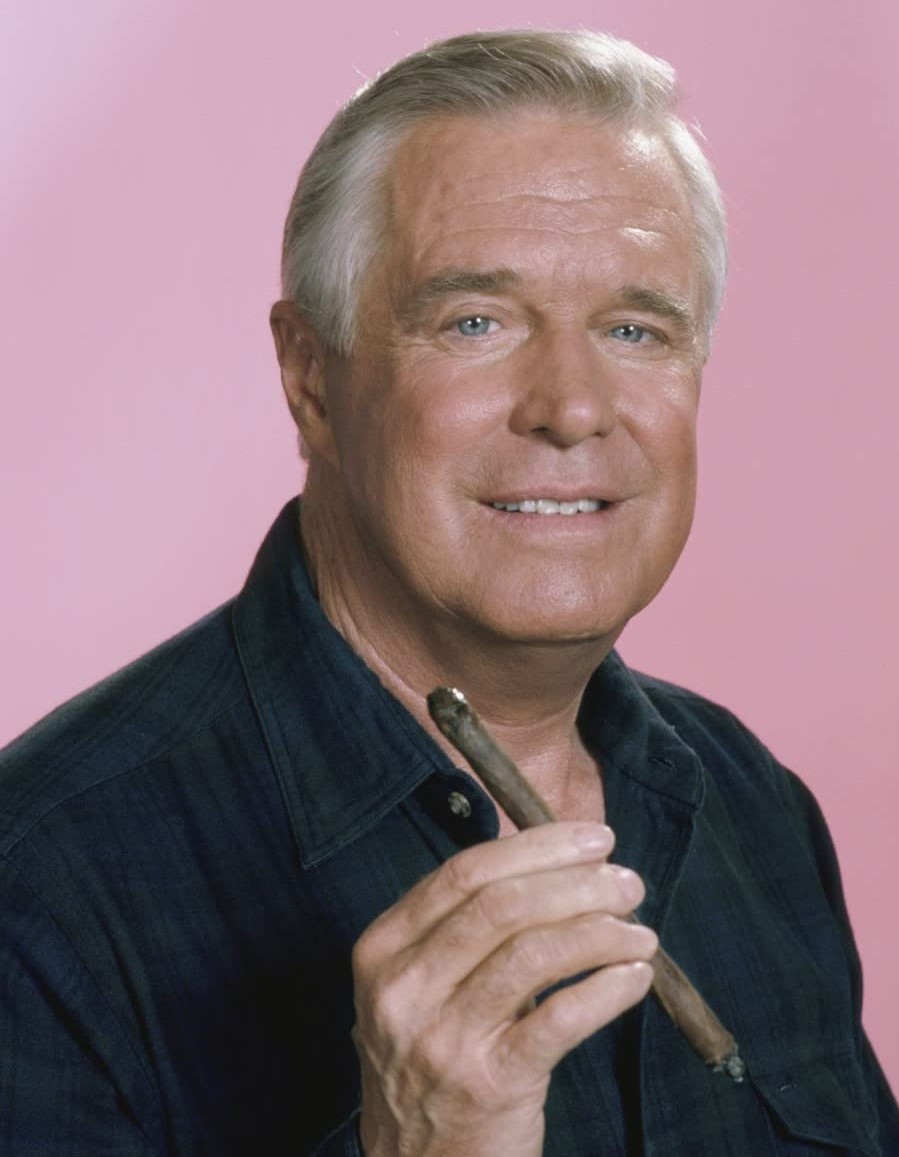
George Peppard


"If you look at my movie list, you'll see some really good movies and then the start of ones that were not so good.  But I was making enough money to send my children to good schools, have a house for them and give them a center in their lives."

George William Peppard was born in Detroit, Michigan on October 1, 1928.  He was the son of a building contractor and an opera singer, but like so many other families in the late 1920s, they lost everything in the Great Depression.

After high school, Peppard enlisted in the Army.  Though he'd later famously play a Colonel on television, he left the service as a full Corporal.  He returned to the U.S. and completed his bachelor's degree at what is now Carnegie Mellon University in Pittsburgh.

After a short stint as a radio DJ, Peppard made his way to New York and the Broadway stage. He considered himself a method actor, having trained under professional acting coach Lee Strasberg.  He would apply this acting technique throughout his career, much to the chagrin of producers and co-stars.

In the mid-1950s, Peppard relocated to Hollywood, where he got his first roles on such television series as Alfred Hitchcock Presents and Kraft Television Theatre.  His rugged good looks quickly got him noticed, and in 1960, he was cast in what many consider to be his signature role, opposite Audrey Hepburn in Breakfast at Tiffany's.  Director Blake Edwards was dead set against hiring Peppard for the role, but he was ultimately overruled by studio executives.  Reportedly, Peppard did not get along with any cast members or crew, most famously Hepburn himself.

By the 1970s, Peppard had returned to television, and appeared for two seasons as the title role in the detective series Banacek.  Ten years later, he'd sign on as the lead for a new action series produced by Stephen Cannell called The A-Team.  It ran for five seasons on NBC and introduced Peppard to a new generation of viewers, this blogger included.

In 1992, Peppard, a lifelong smoker, was diagnosed with lung cancer.  Doctors removed part of his lung, but the damage had already been done.  He ultimately passed away on May 8, 1994.  He was just 65 years old.

In keeping with his wishes, Peppard's body was returned to Michigan.  He was buried with his parents in Dearborn's Northview Cemetery.  It is a very simple cemetery with winding dirt roads.


Rest in peace.

Trivia
  • Despite his declining health, Peppard continued acting in Hollywood.  His final project was an episode of Matlock that was intended to serve as a spin-off for a new series.  The P.I. was to star Peppard and Tracy Nelson as a father/daughter detective team.  Although the series never came to be, the episode is included in Matlock reruns.

  • In 1972, Peppard stood trial in Boston, charged with attempted rape of a stripper in his hotel room.  He was ultimately cleared of the charges.

  • In 1979, Peppard appeared as a guest on the daytime game show Password Plus.  Ultimately, NBC opted not to air the episode after Peppard went on an insane rant criticizing their executives and the paperwork required to appear on the show.  Fortunately for us, the episode is available on YouTube.

  • In 1981, Peppard was hired to play the lead role of Blake Carrington on the ABC nighttime soap opera Dynasty.  During the first three weeks of shooting however, he was constantly at odds with producers over the character, believing him to be a J.R. Ewing knockoff.  He was ultimately released from the series and replaced by John Forsythe.

  • In addition to acting, Peppard was also a licensed pilot.

  • Look, I loved The A-Team, but it never made any sense to me that the entirety of the U.S. government couldn't find these guys, yet the average citizen on the street could find them at a moment's notice.

Sunday, October 8, 2023

Darren #1: Dick York


"You know, three whales get in trouble and people from all over volunteer to help.  Wouldn't it be wonderful if one old has-been actor with a hose up his nose could help millions?"
  -- Dick York

Richard Allen "Dick" York was born in Fort Wayne, Indiana on September 4, 1928.  He grew up in Chicago, where his father worked as a salesman while his mother was a seamstress.  It was here that he began his career in 1943 as star of the radio series That Brewster Boy.

York went on to appear in hundreds of radio shows and instructional films in the Windy City before moving to New York and the Broadway stage.  There, he starred in the acclaimed dramas Tea and Sympathy and Bus Stop.  Hollywood was the logical next step.

During production of the Gary Cooper film They Came to Cordura in 1959, York suffered a debilitating back injury that would mark the beginning of the end of his career.  Despite an addiction to painkillers, he'd continue working in Hollywood however, in such films as Inherit the Wind (1960) and in television, in such series as The Twilight Zone and Route 66.  Then in 1964, he was cast in the role he is most famously known for, Darren Stephens on the Elizabeth Montgomery series, Bewitched. 

The series ran for eight seasons, but York would only participate in the first five.  His back condition was only getting worse, and producers went out of their way to make him as comfortable as possible on set.  By 1969 however, if was clear to York himself that he was no longer physically able to perform in the role, and he asked to be released from his contract. The producers readily agreed.  Here's his final scene from the series. 

York and his wife then returned to Michigan, opting to care for her dying mother.  Shortly after they moved there however, York was dealt another blow when he was diagnosed with emphysema.  His years of cigarette addiction had finally caught up him.

York's final years saw him confined to a wheelchair and hooked up to an oxygen tank.  He maintained a positive outlook however, and even founded a charity called Acting for Life in 1973.  It raises money for the homeless, both here and abroad.  He later stated "I've been blessed.  I have no complaints.  I've been surrounded by people in radio, on stage, and in motion pictures and television who love me.  The things that have gone wrong have been simply physical things."

York ultimately lost his battle with emphysema on February 20, 1992.  He was 63 years old.

Dick York was laid to rest at Plainfield Cemetery in Rockford, Michigan.


Rest in peace.

Trivia
  • York authored an autobiography entitled The Seesaw Girl and Me: A Memoir.  You can pick up a copy from Amazon.

  • At the end of the fourth season, York received an Emmy nomination for Best Actor in a Comedy Series.  He lost to Get Smart star, Don Adams.

  • York claimed he had no qualms with Dick Sargent taking on his iconic role.  Five years earlier, Sargent had turned down the role, opting to star in the short-lived sit-com Broadside instead.

  • After he left the series, York lost all contact with Montgomery, claiming in interviews that she was always too busy to see him.  According to series writer William Froug, York was smitten with Montgomery, who did not reciprocate his feelings, and in fact, could not stand him.

Saturday, September 30, 2023

Mister Rogers' Mausoleum

Fred McFeely Rogers was born in Latrobe, Pennsylvania, on March 20, 1928.  He was the son of James Hillis Rogers, a prominent local businessman, who served as President of the McFeely Brick Company.  His mother, Nancy, worked as a volunteer in the local hospital. 

As a child, Fred was shy, introverted and overweight, dubiously earning the nickname "Fat Freddy."  It was during these years that he turned to music and puppetry, two outlets that would later play an important role in his career.

In 1963, he graduated from the Pittsburgh Theological Seminary with a bachelor's degree in Divinity.  He went on to become a Presbyterian minister while earning his graduate degree in Child Development at the University of Pittsburgh.  He then moved to Canada, where he created a new television series for children called Misterogers.  After five years in the Great White North, he returned to Pittsburgh and adapted his show for American audiences, renaming it Mister Rogers' Neighborhood.

The series ran for 33 years, producing 895 episodes.  It was critically acclaimed for focusing on topical children's issues, including sibling rivalry, divorce, and even death.  A trained musician, Rogers wrote and performed many of the songs used throughout the show.  He retired from the series in 2001, making one final appearance following the attacks of September 11th.  With his trademark charm, he reassured both children and adults that life would go on.

In 2002, Rogers was diagnosed with stomach cancer.  He had surgery in early 2003, but his health was in rapid decline.  He ultimately passed on February 27th at the age of 74.

Rogers was laid to rest at Latrobe's Unity Cemetery in his family mausoleum.


Rest in peace, neighbor.

Trivia
  • According to his widow, Mister Rogers' final words, spoken on his deathbed, were "am I a sheep?"  This is a reference to the Last Judgement in the Bible, when the good sheep are separated from the bad goats.  And now you know.

  • Not surprisingly, Rogers authored a number of children's books, which are available from Amazon.

  • During World War 2, Nancy Rogers knitted sweaters for American soldiers heading off to Europe.  Years later, she would continue this tradition for her son, hand knitting the Cardigan sweaters that he wore on the show.

  • Rogers is often credited with saving the VCR.  In 1984, he testified before the U.S. Supreme Court (!) in its landmark Betamax Case.  It was brought about by Universal Studios and the Walt Disney Company, who sued Sony over its Betamax technology, claiming they would lose millions of dollars from the distribution of home-recorded tapes.  Rogers testified that this new technology was beneficial to his audience, stating in part "I just feel that anything that allows a person to be more active in the control of his or her life, in a healthy way, is important."

  • That same year, Burger King created an advertising campaign featuring a Rogers lookalike named "Mister Rodney."  After seeing the ad on television, Rogers told the fast food franchise that they were confusing the children, and he asked them to pull the commercial.  The company readily complied, stating "Mister Rogers is the one guy you don't want to mess with."  Fortunately for us however, the commercial is available on YouTube.

  • In 2002, Rogers was presented with the Presidential Medal of Freedom during a Rose Garden ceremony hosted by George W. Bush.

  • The sets from Mister Rogers' Neighborhood are now on display at the Heinz History Center in Pittsburgh.

Saturday, September 16, 2023

Andy Warhol


"I would rather watch somebody buy their underwear than read a book they wrote."

Andy Warhol was born Andrew Warhola, Jr. in Pittsburgh, Pennsylvania, on August 6, 1928. Art inspired him from an early age, and he began his career as a commercial illustrator.

By the 1950s, he began receiving recognition for his unique style, and he ultimately opened his own studio, The Factory, in New York City.  It would soon become a gathering place for everyone from Hollywood elite to New York's homeless people.

In the 1960s, Warhol branched out into music, serving as manager and producer of The Velvet Underground, an experimental rock band.  He also founded Interview magazine, which is still in publication today. 

In early 1987, Warhol underwent gall bladder surgery at New York Hospital. His recovery was sufficient enough that he was discharged and sent home, where after a few days, he developed a sudden post-operative irregular heartbeat.  He died in his sleep on February 22nd.  He was 58 years old.

Warhol's brothers brought him home to Pittsburgh, where he was laid to rest at St. John the Baptist Byzantine Catholic Cemetery.  Visitors are encouraged to write Andy a note.


Rest in peace.

Trivia

  • For more than twenty years, Warhol dictated his daily diaries to author Pat Hackett, who released an edited compilation of these writings in 2014.  You can pick up a copy of The Andy Warhol Diaries from Amazon.

  • In June 1968, radical feminist writer Valerie Solanas attempted to assassinate Warhol at his studio.  Although he survived the shooting, he'd suffer health repercussions the rest of his life, which ultimately contributed to his untimely passing.  Solanas was later diagnosed as a paranoid schizophrenic and sentenced to a whopping three years in prison.

  • Warhol's family believed his death was preventable and they subsequently sued the hospital for inadequate care.  The case was quickly settled out of court for an undisclosed sum.  Thirty years after his passing, a new investigation confirmed the family's suspicions, citing his family history, his previous injuries and his medical condition prior to surgery as being factors that should have delayed the operation.

  • Today, Pittsburgh is home to The Andy Warhol Museum.  Check it out!

  • Warhol was no stranger to Hollywood, appearing both in front of and behind the camera.  This blogger fondly remembers Warhol's 1985 Love Boat episode.

  • In 2002, Warhol was featured on a commemorative U.S. postage stamp.  Ironically, he did not design it himself.

  • Warhol is often credited with coining the term "15 minutes of fame."

Saturday, September 9, 2023

Miss Jane Hathaway


Nancy Jane Kulp was born in in Harrisburg, Pennsylvania, on August 28, 1921.  She was the only child of a traveling salesman and a schoolteacher who lived in nearby Mifflintown.  In the early 1930s, the family relocated to Miami, Florida.

After high school, Kulp went to the Florida State College for Women, where she earned a bachelor's degree in journalism.  She then enrolled in the University of Miami, where she would ultimately receive a master's degree in English and French.  Before graduation however, she enlisted in the United States Naval Reserve, rising to the rank of Lieutenant, Junior Grade.  Following the end of World War 2, she was honorably discharged and returned to civilian life.   

In 1951, Kulp moved to Hollywood and took a job in the Publicity Department at MGM Studios.  She caught the eye of a talent scout however, who convinced her to become an actress.  She made her feature film debut that year in Director George Cukor's film The Model and the Marriage Broker. Other roles would quickly follow, including Shane (1953) and A Star is Born (1954).

In 1955, Kulp jumped to television, where she joined the cast of The Bob Cummings Show.  Other series would follow, including memorable guest appearances on Perry Mason, The Twilight Zone, and My Three Sons.  Then in 1962, she was cast in the role for which she most famously remembered, Miss Jane Hathway on The Beverly Hillbillies.  Go ahead.  Play the theme song.  She received an Emmy Award for the role and continued with the series until its cancellation in 1971. 

When the series ended, Kulp continued acting in Hollywood, making appearances on such series as Sanford and Son, The Love Boat, and later, Quantum Leap.  

An avid smoker, Kulp was diagnosed with cancer in 1990.  She began chemotherapy, but by 1991, the cancer had spread, and it ultimately took her life on February 3rd.  She was 69 years old.

Kulp was laid to rest in her family plot at Westminster Presbyterian Cemetery in Mifflintown, just outside Harrisburg.  Her headstone notes the role for which she was most famous for, that of Miss Jane Hathaway.  It also pays tribute to her military service.


Rest in peace.

Trivia
  • In 1984, Kulp decided to run for the U.S. House of Representatives in her home state of Pennsylvania.  She received the Democratic nomination and would soon face Republican Bud Shuster in the general election.  Having long differed with Kulp's politics, former co-star Buddy Ebsen offered to record a campaign ad for Shuster, who ultimately won the seat.  After her defeat, Kulp would later say of Ebsen "he's not the kindly old Jed Clampett that you saw on the show...it's none of his business and he should have stayed out of it."

  • After her run for Congress, Kulp became an artist-in-residence at Juniata College in Huntingdon, Pennsylvania.  She later became an acting instructor.

  • Trivia: Who was the very first guest on The Arsenio Hall Show?  Answer: Nancy Kulp.

  • Two years before her passing, Kulp publicly declared that she was in fact, a lesbian.